Language Arts 802 Development and Usage of English Quiz 2 Classification of Words
one / ten
Cheesy
Other languages have words that mean simulated, tacky, or trying too hard, but only the English language slang term "cheesy" can fully express something so fake that it stinks like Camembert: "He came upwards to me at the bar with this big cheesy grinning on his face and said, 'Did it hurt when you fell from heaven?'" Meet if you can judge the near annoying discussion in English.
2 / 10
Pimp
Surely this discussion's transformation is 1 of the strangest in the English language language (which is maxim a lot). According to Merriam-Webster, men who exploit prostitutes accept been called "pimps" since the 1700s, and since way before then, they've been dressing in showy outfits effectually the earth. Merely only in English language has "pimp" become a humorous, semi-favorable verb, meaning to refurbish something, to go far super-fancy, as in the reality Tv set evidence Pimp My Ride.You thinkthat'due southweird? Check out these bizarre slang words from the 1920s.
3 / 10
Serendipity
Many of the words on this list are slang, but not this i. According to Merriam-Webster, serendipity, which means the state of finding pleasant or desirable things past accident, comes from Serendip, an ancient name for Sri Lanka. In 18th century Britain, the writer Horace Walpole popularized the word in reference to a folk tale almost 'the three princes of Serendip,' who "were always making discoveries, past accidents and sagacity, of things they were not in quest of." Sounds like serendipity to us! These beautiful words have no English equivalent.
4 / x
Merchandise-off
It's often been observed that English language is the easiest linguistic communication to learn but the hardest to acquire well…and this cracking, compact expression goes a long manner in explaining why. "Merchandise" is 1 of the many English verbs that change dramatically when paired with different prepositions… and each expresses a concept that would accept a whole sentence to explain in whatsoever other language: Trade in, trade upwards, and trade down are just a few examples. Merely the merchandise-off is a peculiarly American concept; what other nationality would actually accept to state: "You can't accept it all; there is always a trade-off!" Trying to larn a language other than English? Commencement from "hello."
five / 10
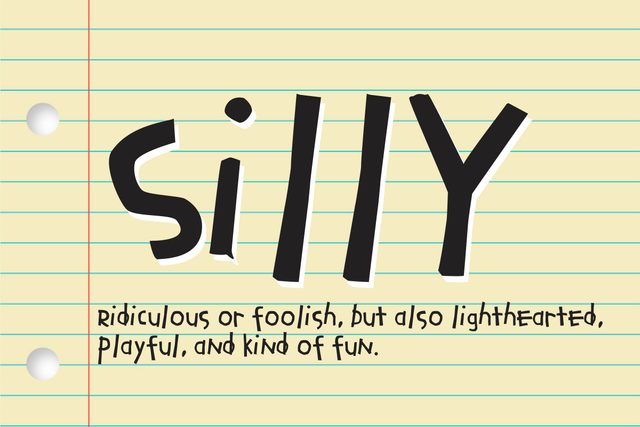
Featherbrained
In that location are plenty of synonyms out at that place for ridiculous or foolish, but this one besides means lighthearted, playful, and kind of fun. Could it be a faint echo of the give-and-take's evolving definition? Co-ordinate to the Oxford English Dictionary, 500 years ago featherbrained meant "happy, beatific, lucky, or blessed. From in that location it came to hateful innocent, or deserving of compassion," which morphed into the delicious absurdity we enjoy today in silly hats, silly jokes, and, perhaps best of all, Monty Python's Ministry building of Airheaded Walks. Here are some common words that were inspired by real people.
6 / 10
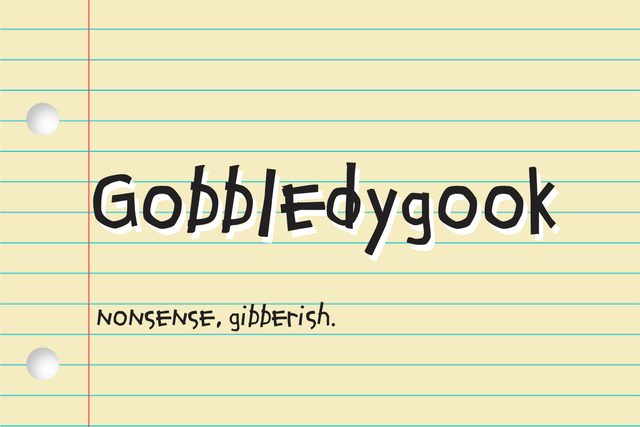
Gobbledygook
Gobbledygook sounds like Middle English simply according to Dictionary.com, this delightful term for unintelligible jargon actually only dates from World War II, when American Congressman Maury Maverick (yes, really his name) "used [information technology] in a memo dated March 30, 1944, banning 'gobbledygook language' and mock-threatening, 'anyone using the words activation or implementation volition exist shot.' Apparently Maverick was thinking of a turkey's "gobble." These are the funniest words in the English language language.
7 / 10
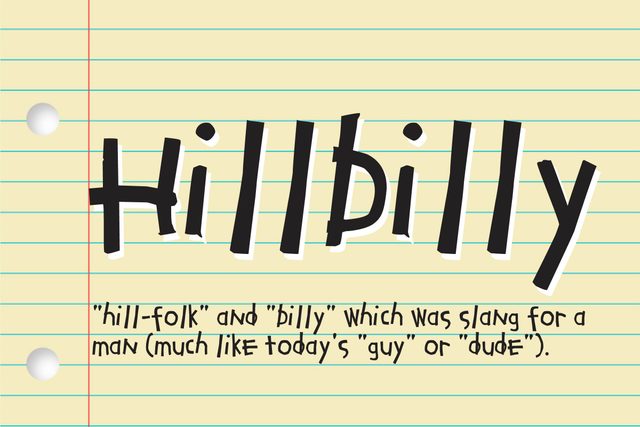
Hillbilly
According to Dave Tabler, at Appalachian History website, this proper name for a rural American was brought by Scots-Irish settlers who flooded Appalachia in the 1700s. The word probably comes from two Scottish words mashed together: "loma-folk" and "billy" which was slang for a man (much similar today's "guy" or "dude") and the term was more descriptive than disparaging. But these days if you don't consider yourself a hillbilly, don't telephone call someone else ane… or you'll discover "them's fightin' words!" And sentinel out for these 12 words with surprisingly offensive origins, besides.
viii / x
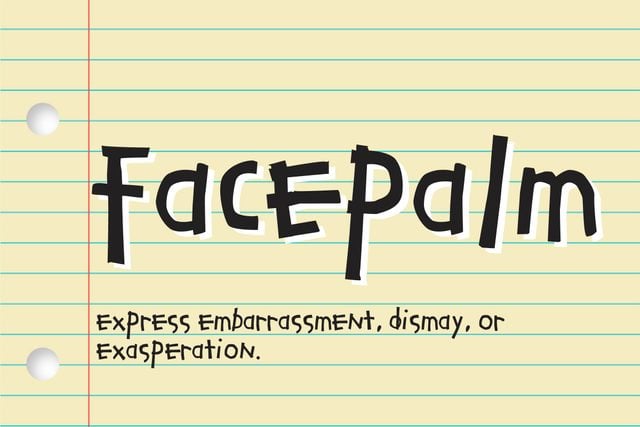
Facepalm
People have been hiding their faces in their hands to express embarrassment, dismay, or exasperation for hundreds of years (at least), but Merriam-Webster dates the term "facepalm" to 1996, making information technology the newest word on this list. Our favorite use of the word comes from The Los Angeles Review of Books in 2014: "There'due south a kind of facepalm moment in the terrific airplane pilot episode of Amazon'south terrific new series Transparent when you realize that the championship is a pun."
9 / 10
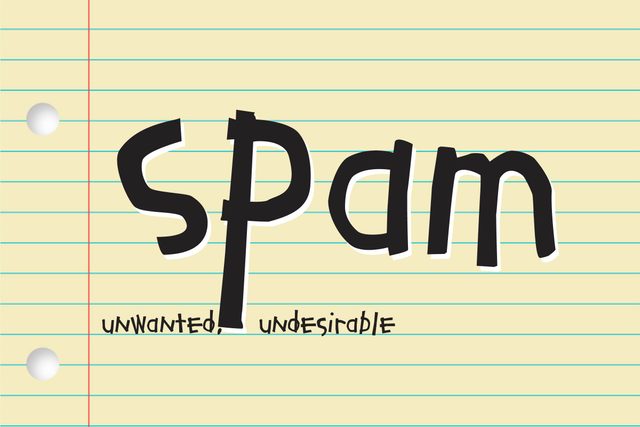
Spam
As Time magazine puts it, "Before 'spam' was a word that represented unwanted emails, information technology was a word that represented the successful repackaging of unwanted meats." Introduced in 1937, SPAM was a clever way to repackage the undesirable cut of pork shoulder, and the brandname itself is a combination of "spiced" and "ham," invented in a naming contest. The newer meaning derives from a skit by the 1970s British comedy troupe Monty Python in which a band of Vikings drown out all other conversation past shouting the give-and-take "spam" over and over again—much as a barrage of unsolicited commercial emails will overwhelm everything else in your inbox. Larn the names of some very specific things you lot didn't realize had names.
x / 10
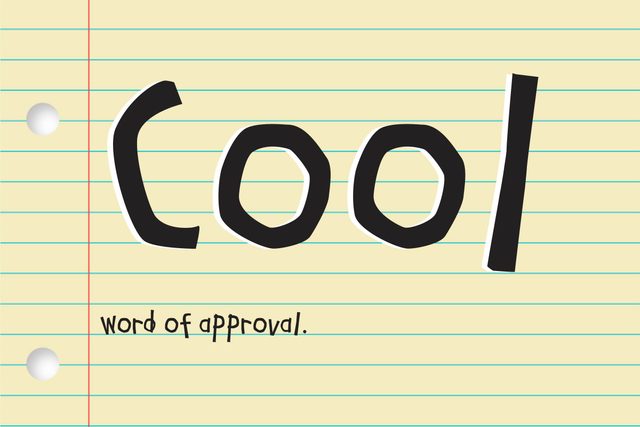
Cool
This multifaceted discussion of blessing is another one that started out significant one thing and wound up equally some other. According to Merriam-Webster, we have to go all the way back to 12th century Middle English to find the beginning mention of cool, meaning the opposite of hot. Over the years this thought gets applied to emotions: tempers that run hot or cool. In the 1920s, American jazz culture prized that quality of relaxed calm in music and in life, and the give-and-take became a synonym for beauteous, fashionable, and good, across the globe. Now that's cool! Learn the origins of some of the most common English language slang terms.
Originally Published: February 25, 2019
oliverthaverefull.blogspot.com
Source: https://www.rd.com/list/english-words-no-other-language/
0 Response to "Language Arts 802 Development and Usage of English Quiz 2 Classification of Words"
Post a Comment